Different muscles injuries

Different Types of Muscle Injuries

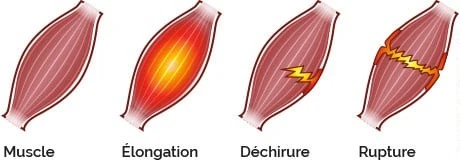
Muscle injuries are common, especially among athletes. They can vary in severity, from mild discomfort to complete disability. Here is a simplified presentation of three common types of muscle injuries: strain, tear, and rupture.

Physiopathologie des blessures musculaires

- Strain (grade 1)

A strain is the mildest muscle injury. It corresponds to an excessive stretching of muscle fibers without any rupture. Symptoms include:

    • Sharp, localized pain
    • Swelling (edema)
    • Limited range of motion

- Tear (grade 2)

A tear, or muscle tear, is a more serious injury than a strain. It involves the rupture of a number of muscle fibers. Symptoms are more intense and may include:

    • Sudden, severe pain
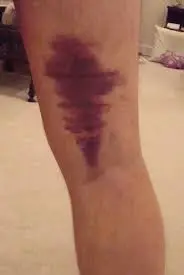
    • Hematoma (bruising)
    • Inability to continue the current activity

- Rupture (grade 3)

A muscle rupture is the most severe form of muscle injury. It corresponds to a complete tear of the muscle. Symptoms are the most significant:

    • Extremely sharp pain
    • Loss of muscle function
    • Visible deformity in some cases
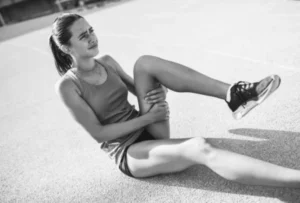
Blessure du sport

What Causes Muscle Injuries ?

Muscle injuries, whether strains, tears, or ruptures, are often linked to several factors. The most common causes are:

  • Lack of warm-up
  • Muscle fatigue: excessive fatigue due to overly intense or frequent training can weaken muscles and make them more vulnerable.
  • Poor technique: improper execution of movements, especially when practicing a sport, can stress muscles inappropriately.
  • Muscle imbalance: an imbalance between different muscle groups can create tension and increase the risk.
  • Inadequate equipment: using worn-out or poorly fitted shoes or sports equipment
  • Climatic conditions: cold or humidity can make muscles stiffer and more prone to injury.
  • Direct impact: a violent shock to the muscle
  • Sudden changes in direction: sports that require rapid changes in direction, such as football or tennis, increase the risk of muscle injuries.
  • In summary, muscle injuries are often linked to a combination of factors. By adopting good practices, it is possible to significantly reduce the risks.

Prevention

To prevent these injuries, it is recommended to:

    • Warm up properly before any physical activity.
    • Listen to your body and stop if you feel any pain.
    • Gradually increase the intensity and duration of exercise.
    • Vary exercises to avoid monotony and work all muscle groups.
    • Get enough rest between training sessions.
    • Use suitable and well-maintained equipment.
    • Consult a professional for a personalized training program and advice on injury prevention.
Hématome

Rehabilitation of Muscle Injuries :

Physical therapy treatment for muscle injuries is essential for optimal recovery and a quick return to activity. Its main objectives are:

  • Reduce pain and inflammation : the physiotherapist will use various manual techniques, such as massage, gentle mobilizations, and cryotherapy (cold application), to relieve pain and reduce inflammation.
  • Improve blood circulation : specific techniques such as manual lymphatic drainage will promote better blood circulation.
  • Recover joint mobility : joint mobilization exercises will be performed to maintain or restore a normal range of motion.
  • Strengthen the musculature : once the acute phase has passed, the physiotherapist will set up a progressive muscle strengthening program to regain the strength and endurance of the injured muscle.
  • Re-educate the sporting gesture : specific exercises will allow the sporting gesture to be re-educated safely, focusing on coordination and balance.
  • Prevent recurrences : the physiotherapist will give you advice to prevent recurrences, such as specific stretches and strengthening exercises to be performed at home. The different stages of rehabilitation may vary depending on the severity of the injury and its progression. It is important to note that the duration of rehabilitation varies depending on the nature of the injury and the individual response of each patient.
Consultation en kinésithérapie - Renforcement musculaire